

20 Jul What Sets Off a Home Alarm Besides an Intruder?
If your system just went off and no one is trying to break in, you are probably wondering what sets off a home alarm besides an intruder — and the honest answer is that a surprising number of everyday things can trip it, from smoke and carbon monoxide to a wandering pet or a dying battery. For families across Tulsa, OK, most alarm activations are not burglars at all; they are “nuisance” or false alarms with perfectly ordinary explanations. Knowing the usual culprits helps you respond calmly, avoid needless panic, and keep your system working the way it should.
At Tulsa Lock & Key, we install and service alarm systems every week, so we have seen just about every reason a siren goes off. Here is what is really behind those unexpected alerts.
What Sets Off a Home Alarm Besides an Intruder: The Usual Suspects
A modern home alarm is really a bundle of different sensors, and each one watches for something different. Some are life-safety devices that detect genuine hazards, while others are security sensors that can be fooled by harmless movement or environmental changes. That mix is exactly why the same panel that catches a break-in might also sound off because a spider crawled across a motion detector.
The most common non-intruder triggers fall into a few groups: real emergencies like fire and gas, harmless motion from pets and insects, environmental factors like steam and drafts, and simple maintenance issues like weak batteries. Two of these — smoke and carbon monoxide — are not false alarms at all and should always be treated as urgent.
- Smoke or fire detected by an integrated smoke sensor.
- Carbon monoxide building up from a furnace, water heater, or car.
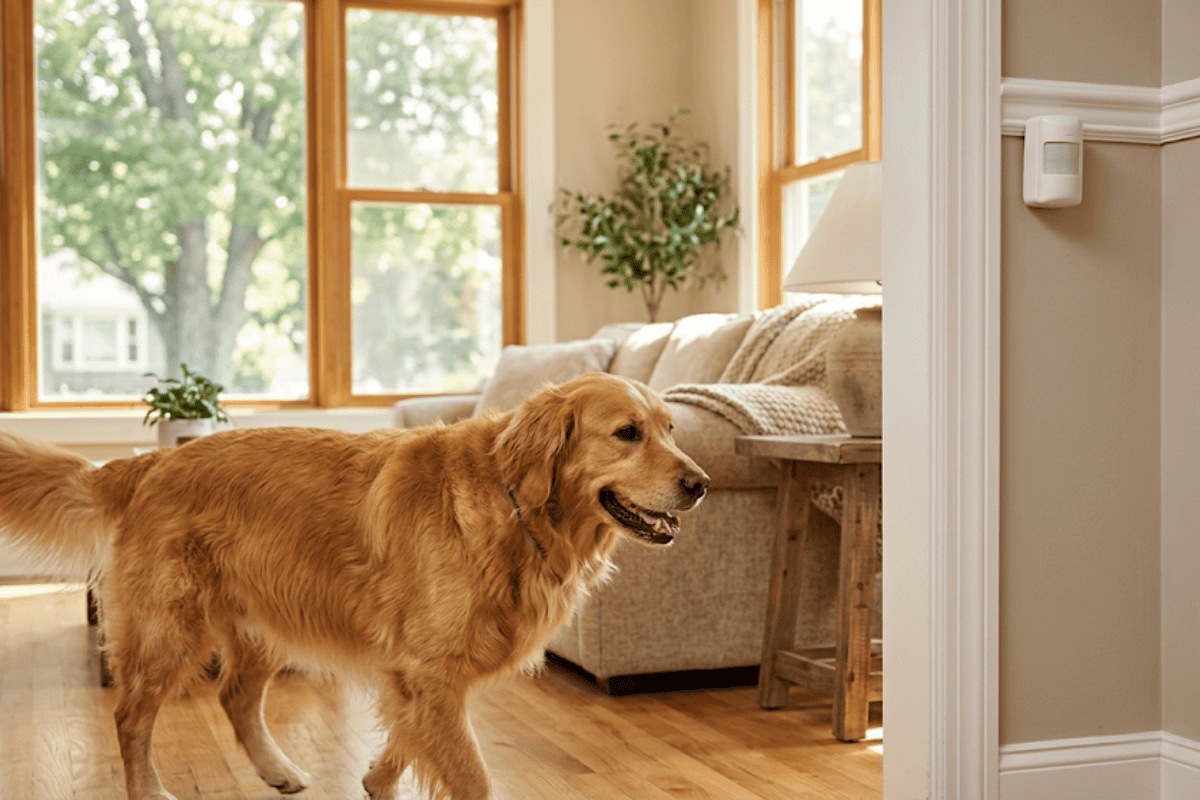
- Pets or large animals moving in front of a motion sensor.
- Insects or spiders crawling directly on a sensor lens.
- A low or dying battery sending a fault or trouble signal.
- Steam, humidity, or drafts from showers, cooking, or vents.
Real Hazards vs. False Triggers
It helps to separate the alerts that demand action from the ones that just need a reset. Smoke or fire, detected by an integrated smoke sensor, is always a real emergency and should never be ignored. Carbon monoxide building up from a furnace, water heater, or car is also a genuine emergency, because the gas is invisible and odorless. Pets or large animals moving in front of a motion sensor are a false trigger, as are insects or spiders crawling on a sensor lens. A low or dying battery sending a trouble signal is a maintenance issue, not a break-in, and steam, humidity, or drafts are environmental false triggers rather than real threats.
| Trigger besides an intruder | What it is | Real emergency? |
|---|---|---|
| Smoke or fire | Integrated smoke sensor detects combustion | Yes — act immediately |
| Carbon monoxide | Invisible gas from furnace, water heater, or car | Yes — act immediately |
| Pets or large animals | Motion in front of a motion sensor | No — false trigger |
| Insects or spiders | Bug crawling directly on a sensor lens | No — false trigger |
| Low or dying battery | Sensor sends a fault or trouble signal | No — maintenance issue |
| Steam, humidity, or drafts | Showers, cooking, or vents near a sensor | No — environmental |
The Emergencies You Should Never Reset and Ignore
When your alarm signals smoke, get everyone outside first and call for help. Working smoke alarms cut the risk of dying in a home fire dramatically, which is why they are wired into so many modern security systems. Carbon monoxide is even sneakier because you cannot see or smell it; the gas is often called the “invisible killer,” and the monoxide your detector catches can come from a malfunctioning furnace or a car left running in an attached garage. If a CO alert sounds, move to fresh air immediately, because the early symptoms of poisoning mimic the flu and can escalate quickly. Reliable placement of these life-safety detectors throughout your Tulsa home is the difference between a nuisance beep and a life saved.
Call Tulsa Lock & Key to have your smoke and carbon monoxide sensors professionally placed and tested.
How to Cut Down on False Alarms
Most nuisance activations are preventable with a little routine care. Pet-immune motion sensors, thoughtful sensor placement, and fresh batteries eliminate the majority of false trips, and keeping sensor lenses clean stops bugs from being mistaken for movement. If your alarm keeps sounding for no clear reason, that is usually a sign a sensor needs adjustment or service rather than something you should simply mute.
Consistent activations also wear on your patience and can lead to fines in some cities when responders are dispatched repeatedly. A quick tune-up of your security system often solves recurring problems for good, and pairing your alarm with strong door hardware and up-to-date locks gives you layered protection that a single sensor never could.
Why Choose Tulsa Lock and Key
Tulsa Lock & Key has protected homes across Tulsa, OK for decades, and our technicians know how to make an alarm sensitive enough to catch a real threat without crying wolf over the family dog. We evaluate your layout, lighting, and traffic flow to place motion, door, smoke, and carbon monoxide sensors where they work best. Our people-first approach means clear explanations, honest recommendations, and fast local response when something needs attention. When you want a system that alerts you only when it truly matters, our team delivers dependable, professionally tuned protection.
Conclusion
So what sets off a home alarm besides an intruder? Everything from genuine dangers like smoke and carbon monoxide to harmless culprits like pets, insects, drafts, and weak batteries. The key is learning which alerts demand immediate action and which simply call for a reset or a service visit. If your Tulsa-area system keeps sounding without a clear reason, do not just live with it — let our team diagnose and fix the cause. Call Tulsa Lock & Key at (918) 664-5010 and get an alarm that you can actually trust.
Tired of nuisance alarms? Contact Tulsa Lock & Key to fine-tune your system today
Frequently Asked Questions
Can pets set off a house alarm?
Yes, pets are one of the most common causes of false alarms because their movement and body heat can trigger standard motion sensors. Many systems offer pet-immune sensors that ignore animals under a certain weight, usually around 40 to 80 pounds. Proper placement and the right sensor settings can prevent most pet-related activations.
What can trigger a burglar alarm for no reason?
Alarms that seem to go off for no reason are usually reacting to something small, such as a low battery, a loose sensor, a drafty door, or an insect on a detector. Environmental factors like steam, strong sunlight, or heating and cooling vents can also fool sensors. If it keeps happening, a sensor likely needs cleaning, adjustment, or replacement.
Can spiders or insects set off an alarm?
Yes. A spider or insect crawling directly across the lens of a motion detector can register as movement and trip the alarm. Webs built near a sensor can have the same effect. Keeping sensor lenses clean and occasionally dusting the area around them helps prevent these false alerts.
Do smoke detectors trigger the security alarm?
In many modern systems, smoke and carbon monoxide detectors are integrated with the security panel, so they can trigger the same siren and monitoring response. This is a safety feature, not a malfunction, because it ensures a fire or gas leak gets an immediate response. These alerts should always be treated as real emergencies.
Can a low battery set off a house alarm?
A low battery usually causes a trouble or fault signal, such as chirping or a warning light, rather than a full alarm, but in some systems it can trigger the siren. Replacing batteries on a regular schedule prevents these interruptions. If a fault persists after new batteries, the sensor itself may need service.
Sorry, the comment form is closed at this time.