

14 Aug Can a Locksmith Tell If Someone Has Broken Into a Lock Before?
Homeowners near 21st Street in Tulsa, OK regularly call a locksmith after noticing something specific: fresh scratches around the front door’s keyway or a deadbolt that suddenly feels stiff and hard to turn. That situation raises the exact question this post answers: can a locksmith tell if someone has broken into a lock before, even when nothing appears to be missing and the door still opens and closes like normal? In most cases, yes. Picking, bumping, shimming, and forced entry all leave physical evidence inside and around a lock, and a trained locksmith knows exactly where to look during a hands-on inspection.
That distinction matters more than most homeowners realize. A lock that looks fine from the porch can be hiding worn pins, hairline scratches inside the keyway, or a strike plate that’s been pried loose and pushed back into place. Skipping the inspection means guessing, and guessing about home security in Tulsa, OK is a bad habit to get into. This post walks through what a locksmith actually checks, what each piece of evidence tends to mean, and what typically happens after the inspection is done.
What “Broken Into” Actually Looks Like on a Lock
Movies make lock tampering look dramatic, but in real life the signs are often subtle. Burglars generally use one of four approaches against a residential lock: picking (manipulating the pins with a thin tool), bumping (using a specially cut key and a sharp strike to force the pins into place), shimming (slipping a thin piece of metal past the latch or cylinder), or straightforward force (kicking, prying, or drilling). According to FBI crime data, forcible entry accounts for the majority of residential burglaries nationwide, which is a strong argument for paying attention to the door and frame, not just the lock cylinder itself, whenever something feels off. You can review the government’s breakdown of burglary classifications, including how forcible entry compares to unlawful entry without force, for context on how common each method really is.
Each of these methods leaves a slightly different fingerprint. Picking tends to scratch the inside of the keyway in a pattern that’s different from normal key wear. Bumping can leave small dents or shiny marks on the pins from the impact of the bump key. Shimming often leaves fine scrape marks along the edge of the latch or cylinder housing. Forced entry is usually the most obvious, showing up as a cracked door frame, a bent strike plate, or splintered wood near the lock. That lines up with published residential security guidance noting that the door frame, not the lock itself, is often the weakest point in the entire assembly. A locksmith who has seen hundreds of doors can usually tell within a few minutes which of these, if any, was attempted.
Can a Locksmith Tell If Someone Has Broken Into a Lock Before? The Physical Evidence They Check
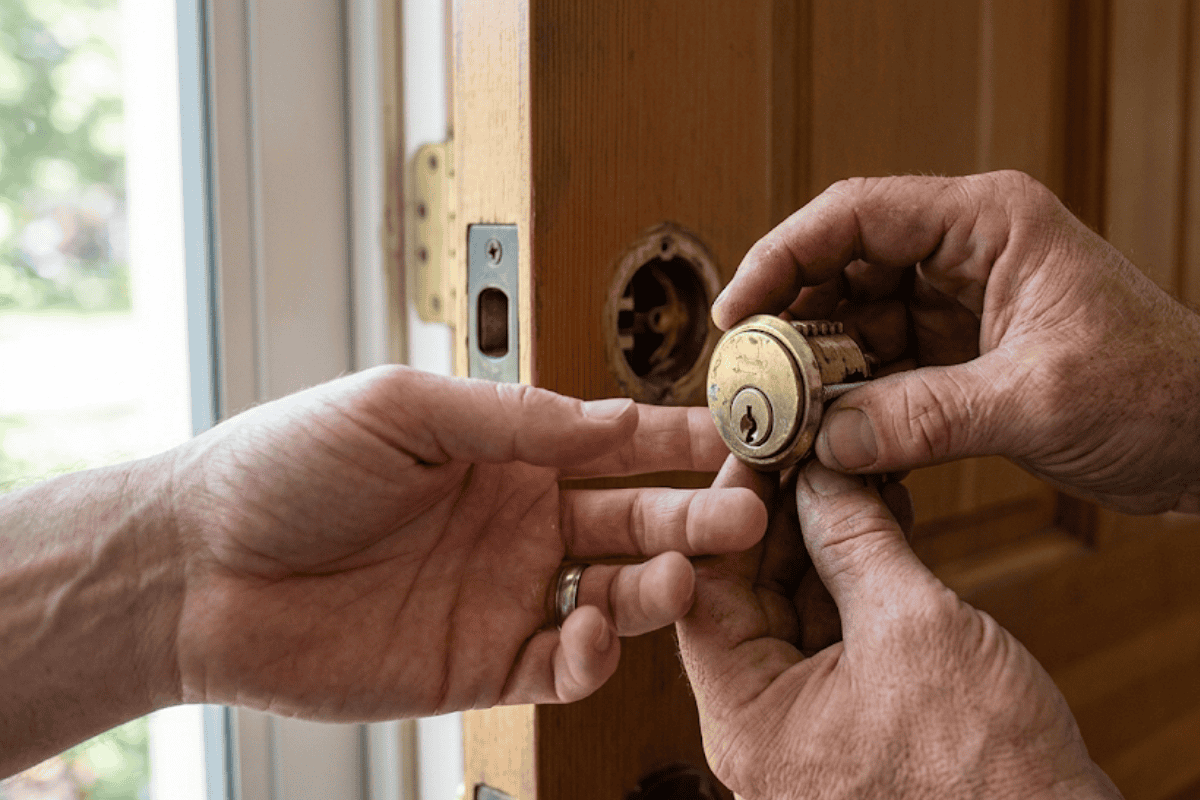
Answering can a locksmith tell if someone has broken into a lock before comes down to a physical inspection, not guesswork. A locksmith typically removes the lock cylinder or opens the mechanism to look at the internal components, then examines the exterior hardware and the door frame around it. The table below lists the most common signs and what each one usually indicates.
| Physical Evidence | What It Typically Indicates |
|---|---|
| Fresh scratches around the keyway | Signs of lock picking, where a tool was inserted repeatedly to manipulate the pins |
| Bent, worn, or misaligned pins | Repeated picking or raking attempts that wore down or shifted internal pin stacks |
| Shiny or shaved marks on pins and cylinder | Shimming, where a thin metal tool was used to bypass the latch or cylinder |
| Small dents or impact marks on pins | Lock bumping, caused by striking a specially cut key to jolt the pins into alignment |
| Drill marks near or through the cylinder | A destructive, forced attempt to bypass the lock entirely |
| Damaged strike plate or splintered door frame | Physical forced entry, such as kicking or prying the door open |
Every one of those signs tells a different story about what happened, and often about how urgently the lock needs attention. Scratches inside the keyway that don’t match the pattern of the homeowner’s own key point to picking. Pins that are bent, worn unevenly, or sitting at the wrong height inside the cylinder point to repeated picking or raking. Shiny or shaved marks on the pins and cylinder wall point to shimming. Small dents or impact marks on the pin stack point to bumping. Drill marks near or through the cylinder point to a destructive, forced bypass attempt. A damaged strike plate or a splintered, cracked door frame points to straightforward forced entry, like a kick or a pry bar. Homeowners searching for information on crime prevention through environmental design will find that target hardening (upgrading locks, doors, and frames) is one of the primary strategies police departments recommend for reducing break-in risk in the first place.
Why Choose Tulsa Lock & Key for a Lock Inspection
The inspection itself is the whole point, and it’s where the value shows up before any repair decision gets made. When a technician from Tulsa Lock & Key opens up a lock to check for tampering, the process goes in a specific order: keyway condition first, then pin wear and alignment, then the cylinder housing for shaving or shine, then the strike plate and surrounding door frame for cracks, gouges, or looseness. That sequence exists because each piece of evidence answers a different question, and skipping straight to “replace it” without checking all four areas means recommending a fix before actually knowing what’s wrong.
This matters directly for the can-a-locksmith-tell question, because the answer changes what gets recommended next. A keyway with light scratching and pins that are still in good shape might only need a professional cleaning and a new cylinder, not a full hardware swap. A cylinder with shaving marks from shimming, paired with a strike plate that’s still solid, might call for rekeying a lock rather than replacing it outright, since rekeying resets the pin configuration without tearing out the whole unit. A splintered frame or a bent strike plate, on the other hand, usually means the door hardware itself needs to be replaced, because no amount of rekeying fixes wood that’s already cracked. Tulsa Lock & Key has been doing this kind of inspection work in Tulsa, OK since 1985, and the goal is always to match the fix to what the evidence actually shows, not to default to the most expensive option on the list. Locksmith trade groups echo this approach: guidance on hiring a professional points out that a properly trained locksmith evaluates the whole door assembly, from frame to hardware, rather than treating every call as a simple lock swap.
Notice signs of tampering on your lock? Contact us at Tulsa Lock & Key for a hands-on inspection before you decide what to do next.
Rekey, Repair, or Replace: What Happens After the Inspection
Once the inspection is finished, the homeowner is left with three realistic paths: rekey, repair, or replace. Rekeying is one of the fastest and most affordable ways to secure a door when the hardware itself is still sound but the homeowner wants a fresh set of working keys, whether because of a lost key, a past tenant, or a lock that shows light tampering marks without structural damage. Repair usually applies when a single component, like a strike plate or a cylinder, has failed or been damaged but the rest of the door hardware is intact. Replacement is reserved for cases where the frame, the door itself, or the lock body has been compromised enough that patching it wouldn’t restore real security.
A locksmith who explains all three options, along with why one fits the situation better than the others, is doing the job the way it should be done. Browsing the full range of locksmith services available for homes and businesses in Tulsa, OK is a good next step for anyone comparing what a rekey, a repair, or a full lock replacement actually involves before committing to one.
What to Do If You Suspect Your Lock Has Been Tampered With
If a lock feels different than it used to, or if scratches or damage show up unexpectedly, a few steps help before calling anyone out to look at it.
- Avoid using the lock repeatedly once tampering is suspected, since forcing a damaged lock can wear down evidence a locksmith would otherwise be able to read.
- Take a few clear photos of the keyway, the cylinder face, and the strike plate area in daylight, which helps document the condition of the lock before any repair work begins and matches the kind of documenting a claim advice insurers ask for if the incident turns into a homeowners claim.
- Check whether the door frame near the strike plate feels loose or shows fresh gouges, since frame damage often changes the recommended fix.
- Note the date the change was first noticed, since a rough timeline can help identify whether the tampering happened recently or has been building over time.
- Call a locksmith for a physical inspection rather than assuming the lock is fine just because the door still locks and unlocks normally.
Conclusion
The plain answer is this: a trained locksmith can usually tell whether a lock has been tampered with, because picking, bumping, shimming, and forced entry all leave physical traces that don’t show up from a casual glance at the front door. The rule of thumb worth remembering is simple. If a lock suddenly feels different, whether that’s stiffer, looser, or just off in a way that’s hard to describe, that’s reason enough to have it inspected rather than waiting for a bigger problem to show up. Most inspections turn out to be routine, and a realistic expectation is that many locks showing minor wear can be rekeyed rather than fully replaced, which keeps the fix proportional to the actual damage.
Homeowners and business owners across Tulsa, OK don’t need to become experts in pin tumbler mechanics to stay ahead of this. A single visit from a locksmith who checks the keyway, the pins, the cylinder, and the frame settles the question one way or another, and it usually settles it in under an hour.
Ready to have your lock checked? Contact us or call to schedule an inspection with Tulsa Lock & Key.
Frequently Asked Questions
Can a locksmith tell if a lock has been picked?
Yes, in most cases. Lock picking typically leaves fine scratches inside the keyway and along the pin chamber walls that look different from the wear pattern of a normal key. A locksmith who removes the cylinder and examines the pins can usually identify these marks fairly quickly.
How can you tell if someone tried to break into your lock?
Common signs include scratches around the keyway that don’t match normal key wear, a lock that suddenly feels stiff or loose, small dents on the door frame near the strike plate, or a deadbolt that doesn’t turn as smoothly as it used to. Any of these is worth having a locksmith inspect.
What does a bumped lock look like?
A bumped lock often shows small dents on the pins from the bump key strike, and the lock may turn with less resistance than before. The door exterior usually shows no damage, which is part of why bumping can go unnoticed.
Should a lock be replaced after an attempted break-in?
Not always. If the internal components show only light tampering and the door frame is undamaged, rekeying or a component repair may be enough. Full replacement usually becomes necessary when the strike plate, frame, or lock body itself has been physically damaged.
Can a locksmith tell how old lock damage is?
A locksmith can often distinguish fresh damage, which tends to look brighter or sharper, from older wear, which tends to look duller and more rounded from repeated use. This isn’t an exact science, but experienced technicians can usually make a reasonable judgment based on how the metal looks and feels.
Sorry, the comment form is closed at this time.