

21 Aug How Do Commercial Door Closers Work, and When Do You Need One in Tulsa, OK?
A restaurant near 21st Street in Tulsa failed its annual fire marshal walkthrough this spring because the back kitchen door swung freely on a broken closer arm, propped open with a five-gallon bucket every time a cook stepped out to the dumpster. The inspector cited the open exit as a life-safety violation and gave the owner two weeks to fix it before a re-inspection. Stories like this are exactly why business owners start asking how do commercial door closers work and when do you need them installed, adjusted, or replaced, usually right after an inspector, an insurance adjuster, or a customer in a wheelchair points out a problem the owner never noticed. A door that will not close on its own is not just an annoyance. It is a gap in your building’s fire rating, your accessibility compliance, and your after-hours security all at once.
How Do Commercial Door Closers Work?
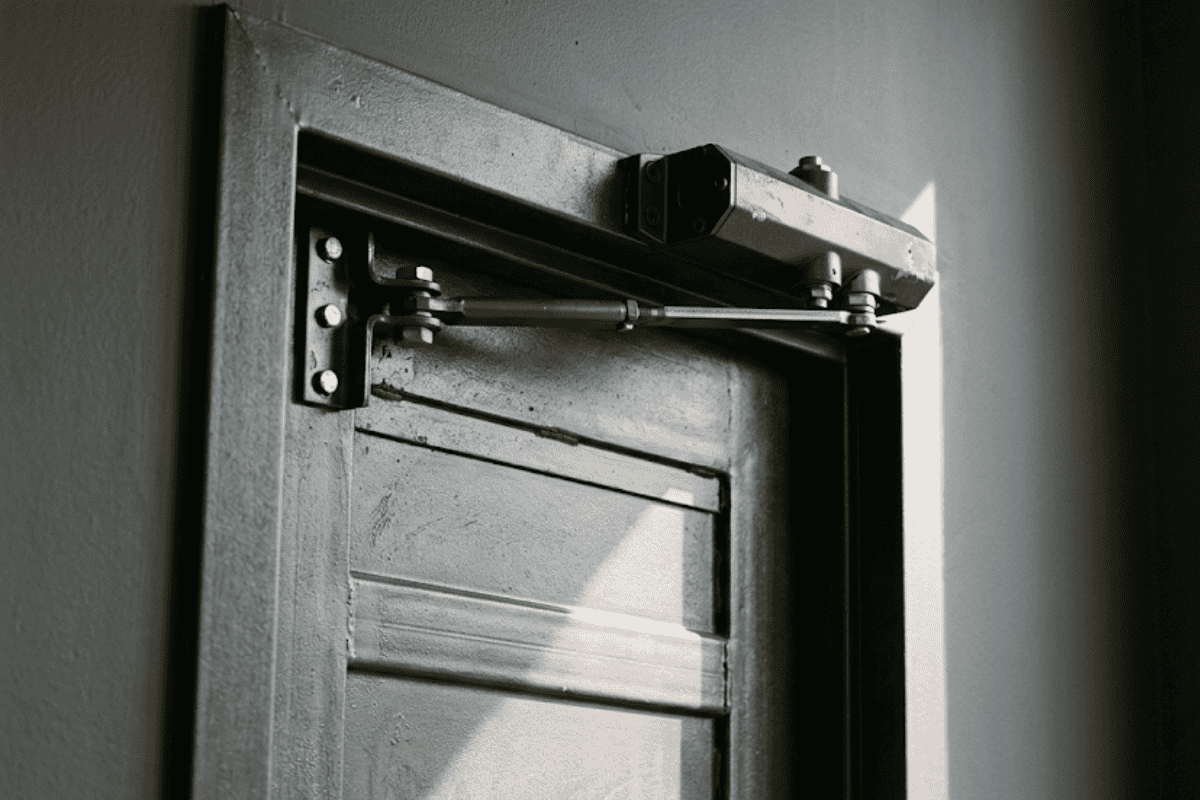
A commercial door closer is a mechanical device, usually a hydraulic piston housed inside a metal cylinder, mounted to the top of a door and its frame. When someone opens the door, they compress a spring inside the closer and push hydraulic fluid through an internal valve system. Once the person lets go, the compressed spring pushes the door shut, while the hydraulic fluid controls how fast it moves so the door does not slam. Most closers have two or three adjustment valves, commonly labeled for general sweep speed, final latching speed near the frame, and “back check,” which slows the door down if someone swings it open too forcefully.
That adjustability matters more than most business owners realize. A closer set too fast can strike an employee carrying supplies through a doorway or slam shut on a customer’s hand. One set too slow, or with too little closing force, may not fully latch, which defeats the point of a fire-rated door and leaves an exterior entrance easier to push open after hours. The mechanism is simple in concept, but getting the speed, force, and latching action right for a specific door, frame, and occupancy type is where a lot of self-installed closers go wrong.
Types of Commercial Door Closers
Not every commercial closer looks or mounts the same way, and the right choice depends on the door material, traffic volume, and appearance requirements. The table below compares the three types most commonly installed on Tulsa commercial buildings.
| Closer Type | Typical Use Case | Commonly Adjusted for ADA/Accessibility |
|---|---|---|
| Surface-mounted | Standard steel and aluminum entry, office, and back-of-house doors; the most common commercial installation | Yes, valves are exposed and accessible for on-site speed and force adjustment |
| Concealed / overhead | Storefront entrances, lobbies, and architectural doors where a closer body should not be visible | Sometimes, adjustment is possible but the mechanism is harder to access and service |
| Floor spring | Heavy glass pivot doors and high-traffic entrances, often paired with panic hardware | Sometimes, adjustment requires accessing the floor-mounted unit and is more specialized |
Surface-mounted closers dominate ordinary commercial doors because their valves sit in plain sight, which makes speed, force, and latching adjustments straightforward for a technician. Concealed and floor spring closers trade that easy access for a cleaner look or the strength to control a heavy glass door, which is why they show up more on architectural entrances than on a stockroom door. Commercial-grade closers built to the ANSI/BHMA A156.4 standard are also rated for a specific cycle life and spring power range, and one set of university closer specifications called for units tested past 15 million cycles for heavy-duty applications, which gives a sense of how much daily abuse a properly rated commercial closer is built to absorb compared to a residential unit.
When Do You Need a Commercial Door Closer in Tulsa, OK?
Not every interior door in a Tulsa business needs a closer, but several specific situations make one necessary rather than optional. A closer becomes a requirement, not a preference, in these cases:
- The door sits on a designated fire-rated wall or is part of a fire-rated corridor, where it must self-close and positively latch to maintain the wall’s fire rating.
- The door serves as a required exit or is tied into panic hardware, since panic bars generally need a compatible closer to reset the latch after each use.
- The building has an HVAC-conditioned space next to an exterior door that keeps getting left open, driving up energy costs and letting in pests or weather.
- The business handles cash, inventory, or client files behind a door that needs to be self-securing between uses, not dependent on staff remembering to pull it shut.
- An ADA-accessible entrance needs a closer calibrated to a specific opening force and closing speed so it does not become a barrier for someone using a wheelchair or walker.
If any of those describe a door in your building, the question is not whether you need a closer but whether the one you have, if you have one, is doing its job correctly.
ADA and Fire Code Considerations for Door Closers
Door closers sit at the intersection of two code systems that do not always pull in the same direction: fire and life-safety code, which wants doors to close firmly and latch every time, and accessibility code, which limits how much force and speed a door can use so it stays usable for people with mobility limitations. Under federal accessibility guidance, most interior doors are limited to five pounds of opening force, and a closer generally has to take at least five seconds to swing from a fully open 90-degree position down to 12 degrees before it is allowed to speed up toward the latch, based on the ADA door standards published by the U.S. Access Board. A city government summary of these same door force guidelines notes that exterior doors are typically allowed a bit more resistance, in the 8.5 to 10 pound range, to hold against wind and pressure differences, and that closers are adjusted using set screws marked for swing speed, latch speed, and back check.
Fire code pulls the opposite direction on doors that protect a rated opening. Fire-rated doors have to be self-closing and self-latching at all times, and guidance on fire door FAQs explains why devices like door closers cannot be removed, blocked, or wedged open, even temporarily, without voiding the door’s fire rating. Reconciling the two, a door that must self-close for fire protection while still being light enough for someone in a wheelchair to open unassisted, is exactly the kind of calibration that separates a correctly specified closer from one that just came in the box that way. For entrances where staff cannot realistically resolve that tension with a spring-hydraulic closer alone, some Tulsa buildings add power-assist or low-energy operators; a code industry summary of automatic door rules explains when building codes now require at least one powered entrance at higher-occupancy commercial buildings.
Signs Your Commercial Door Closer Needs Attention
A door closer rarely fails all at once. It usually gives off warning signs for weeks before someone finally notices, or before an inspector notices for them. Watch for:
- The door slams shut instead of closing gently, which usually means the general sweep speed valve has drifted or the spring tension is set too high.
- The door drifts open on its own or will not stay latched, a sign the closer has lost hydraulic pressure or the arm has come loose from the frame.
- Fluid is visibly leaking from the closer body onto the door or frame.
- Staff have started propping the door open with a wedge, chair, or trash can because closing it takes noticeable effort.
- The closer arm is bent, cracked, or missing a mounting screw after repeated slamming or an accidental impact.
- The door no longer latches into the frame, leaving a visible gap even when it appears closed.
Any one of these is worth a service call. Together, they are usually a sign the closer has reached the end of its service life and needs replacement rather than another adjustment.
Ready to fix a broken or misadjusted door closer before your next inspection? Contact us to get it evaluated.
Why Choose Tulsa Lock & Key for Commercial Door Closers
Most closer problems do not start with a bad part. They start with a closer that was set up as a generic, one-size-fits-all install without anyone checking what code actually requires for that specific door and that specific business. Tulsa Lock & Key starts differently: before adjusting or installing a closer, the team checks the ADA and fire and life-safety code requirements tied to your door’s closing speed, opening force, and whether a delayed-action feature is needed for accessibility, based on how that door is actually used and who is walking through it. A back kitchen exit at a Tulsa restaurant that also needs to double as an accessible route is not adjusted the same way as a fire-rated stairwell door at a warehouse or a glass storefront entrance downtown, and treating them all the same is how businesses end up failing inspections or fielding ADA complaints later.
This is part of a broader approach to business security that starts by learning how a business actually operates, where the vulnerabilities are, and what level of protection makes sense for that specific location, rather than pushing a standard package regardless of fit. For a company that has worked on doors across Tulsa, OK since 1985, that means a closer recommendation is never separated from the exit hardware, panic bars, or access control already on that same door. It gets specified and adjusted as one working system, not as an isolated part swapped in and left to chance.
Conclusion
A door closer looks like a small piece of hardware, but it is doing three jobs at once: protecting your fire rating, keeping your entrance accessible under code, and quietly securing a doorway every time it swings shut. The single most useful rule of thumb is this: if a door is propped open more often than it swings shut on its own, or if staff have started using a wedge instead of trusting the closer, it needs a service call, not a workaround. Fixing that before an inspector or an ADA complaint forces the issue is far less disruptive than dealing with either after the fact. For a Tulsa, OK business, that usually means a short evaluation of the doors that matter most, exits, fire-rated openings, and the main accessible entrance, rather than waiting until one of them fails on its own.
Talk to Tulsa Lock & Key about your commercial door closers. Contact us to schedule an evaluation.
Frequently Asked Questions
How does a commercial door closer work?
A spring and hydraulic fluid inside a metal cylinder control how the door swings shut. Opening the door compresses the spring, and releasing it lets the spring push the door closed while internal valves regulate speed so it closes smoothly instead of slamming. Adjustable valves typically set sweep speed, latching speed, and resistance to forceful opening.
What are the different types of commercial door closers?
The three most common types are surface-mounted, concealed (or overhead), and floor spring closers. Surface-mounted units are visible on the door and frame and most common on standard entrances. Concealed and floor spring closers hide the mechanism and are typically used on architectural or heavy glass doors.
Are door closers required by code on commercial buildings?
Yes, in specific situations. Doors on fire-rated walls or corridors must generally be self-closing and self-latching, and doors on accessible routes must meet set opening force and closing speed limits. Whether a door needs a closer depends on its location and fire rating.
Can a door closer be adjusted for ADA compliance?
Most closers have valves controlling opening force, sweep speed, and latching speed, which can often be tuned to meet accessibility requirements. Some higher-traffic exterior entrances may need a power-assist or low-energy operator instead. The right setting depends on the door’s location and use.
How do I know when a door closer needs repair or replacement?
Warning signs include a door that slams shut, one that drifts open on its own, visible fluid leaking from the closer body, or a bent or loose arm. Staff propping the door open because it is hard to close is also a red flag. Several signs at once usually mean replacement, not adjustment.
Sorry, the comment form is closed at this time.