

09 Jul Do Security Cameras Work in the Dark Without Lights?
One of the most common questions we hear is do security cameras work in the dark without lights, and the reassuring answer is yes — most modern outdoor cameras are built to see in complete darkness without any porch light or lamp switched on. They do it using invisible infrared light rather than the visible light your eyes need, which is why footage can look sharp at midnight even when your yard looks pitch black to you. For homeowners and businesses in Tulsa, OK, that means round-the-clock protection without leaving lights burning all night.
At Tulsa Lock & Key, we install night-capable cameras across the metro, so let us explain exactly how they pull it off and where their limits are.
Do Security Cameras Work in the Dark Without Lights? How Night Vision Works
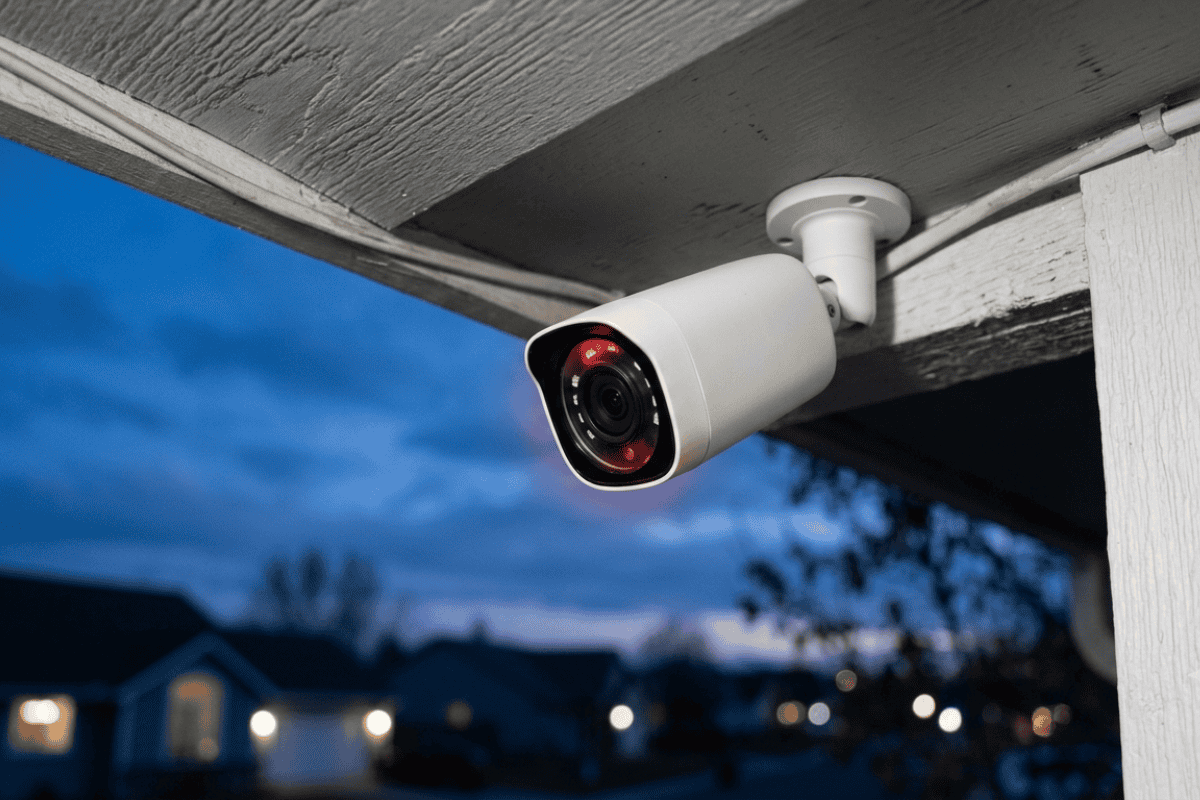
The secret is a ring of small infrared LEDs built around the camera lens. When the camera senses low light, it switches to night mode and turns on those LEDs, flooding the scene with infrared light. Infrared sits just beyond the red end of what people can see, so the human eye perceives nothing, but the camera’s sensor is tuned to detect these longer wavelengths. The camera then displays the reflected infrared as a clear black-and-white image.
This is why you can stand in a dark backyard, see nothing unusual, and still show up perfectly on the recording. The camera is essentially lighting the scene with a “flashlight” that only it can see. Because it makes its own light, it does not depend on the moon, streetlights, or a porch bulb to function.
The Main Ways Cameras See at Night
Not every night-capable camera works the same way. Infrared night vision uses invisible infrared LEDs, produces a black-and-white image, and typically reaches about 30 to 100 feet. Color night vision relies on a very sensitive sensor plus a little ambient light, produces a color image, and works best where some light already exists. A spotlight or floodlight camera switches on a visible white light, produces a color image, and lights the area for both the camera and for you. Thermal imaging reads heat instead of light, produces a heat-map image, and can detect a warm body in total darkness regardless of lighting.
| Night-vision type | Light source | Image | Typical range / best use |
|---|---|---|---|
| Infrared (IR) night vision | Invisible infrared LEDs | Black-and-white | About 30 to 100 feet |
| Color night vision | Sensitive sensor + some ambient light | Color | Best where some light exists |
| Spotlight / floodlight camera | Visible white light | Color | Lights the area and deters |
| Thermal imaging | Reads heat, not light | Heat map | Detects a warm body in total darkness |
The right choice depends on your goals: infrared is the most common and affordable, color night vision looks more natural where a bit of light is present, and thermal excels at spotting people in the darkest conditions.
Call Tulsa Lock & Key and we’ll match the right night-vision cameras to your property.
What Can Still Limit Night Performance
Even great night vision has weak points, and knowing them helps you place cameras wisely. Light level is measured in units called illuminance, and while infrared cameras do not need any, a few conditions can still degrade the picture.
- Rain, fog, and snow scatter infrared and shorten your clear range.
- Reflective surfaces like windows or signs can cause glare and bright spots.
- Spider webs or bugs near the lens reflect infrared and blur the image.
- Very distant subjects fall outside the reach of the infrared LEDs.
These are easy to work around with proper mounting, occasional cleaning, and the right camera for the distance. For complete peace of mind, cameras should work alongside alarms and sturdy locks so that seeing an intruder is backed up by keeping them out.
Why Choose Tulsa Lock and Key
Tulsa Lock & Key has secured homes and businesses across Tulsa, OK for decades, and we know how to get the most out of night vision. Our technicians evaluate your lighting, layout, and distances to choose between infrared, color, spotlight, and thermal options so your cameras deliver clear footage after dark. We give honest recommendations and explain the trade-offs plainly, so you never overpay for features you do not need. When you want dependable around-the-clock coverage from a trusted local team, we are ready to help.
Conclusion
So, do security cameras work in the dark without lights? Absolutely — most use invisible infrared to see clearly in total darkness, while color, spotlight, and thermal options offer alternatives for different needs. The key is choosing the right type for each spot and mounting it to avoid glare, weather, and dirty lenses. If you want night-ready protection anywhere in the Tulsa area, call Tulsa Lock & Key and let our experts light up your security — invisibly.
Want cameras that see in the dark? Contact Tulsa Lock & Key to plan your system.
Frequently Asked Questions
Do security cameras work in complete darkness?
Yes. Cameras with infrared night vision create their own invisible infrared light, so they can capture clear black-and-white footage even in total darkness. Thermal cameras go a step further by detecting heat rather than light. Only basic cameras without any night-vision hardware need existing light to see.
Do you need lights for security cameras to work at night?
No, you do not need visible lights for most modern cameras, because their infrared LEDs illuminate the scene invisibly. Adding some lighting can improve color footage and act as a deterrent, but it is optional. Infrared and thermal cameras function with no visible light at all.
Can security cameras see in color at night?
Some cameras can, using highly sensitive sensors combined with a small amount of ambient light, or by switching on a built-in spotlight. Standard infrared night vision, however, produces a black-and-white image. Color night vision generally needs at least a little existing light to look natural.
How do night vision cameras work?
Night vision cameras use infrared LEDs to flood a scene with light that is invisible to the human eye but detectable by the camera’s sensor. The sensor captures the reflected infrared and displays it as a black-and-white image. When enough visible light returns, the camera switches back to normal color mode.
Do infrared cameras give off visible light?
Infrared light itself is invisible, so you generally will not see a beam. However, many cameras have small LEDs that emit a faint red glow you can notice if you look directly at the lens in the dark. This glow is normal and does not mean the camera is malfunctioning.
Sorry, the comment form is closed at this time.